
Quick Summary
- Long car rides and flights can leave muscles and joints feeling stiff, especially when your usual movement routine changes.
- Small adjustments to posture, luggage handling, hydration, and walking breaks may help you stay more comfortable while traveling.
- Gentle mobility before, during, and after a trip can help you ease back into normal movement without forcing painful ranges.
- If discomfort lingers or movement feels difficult, an individualized evaluation can help identify useful next steps.
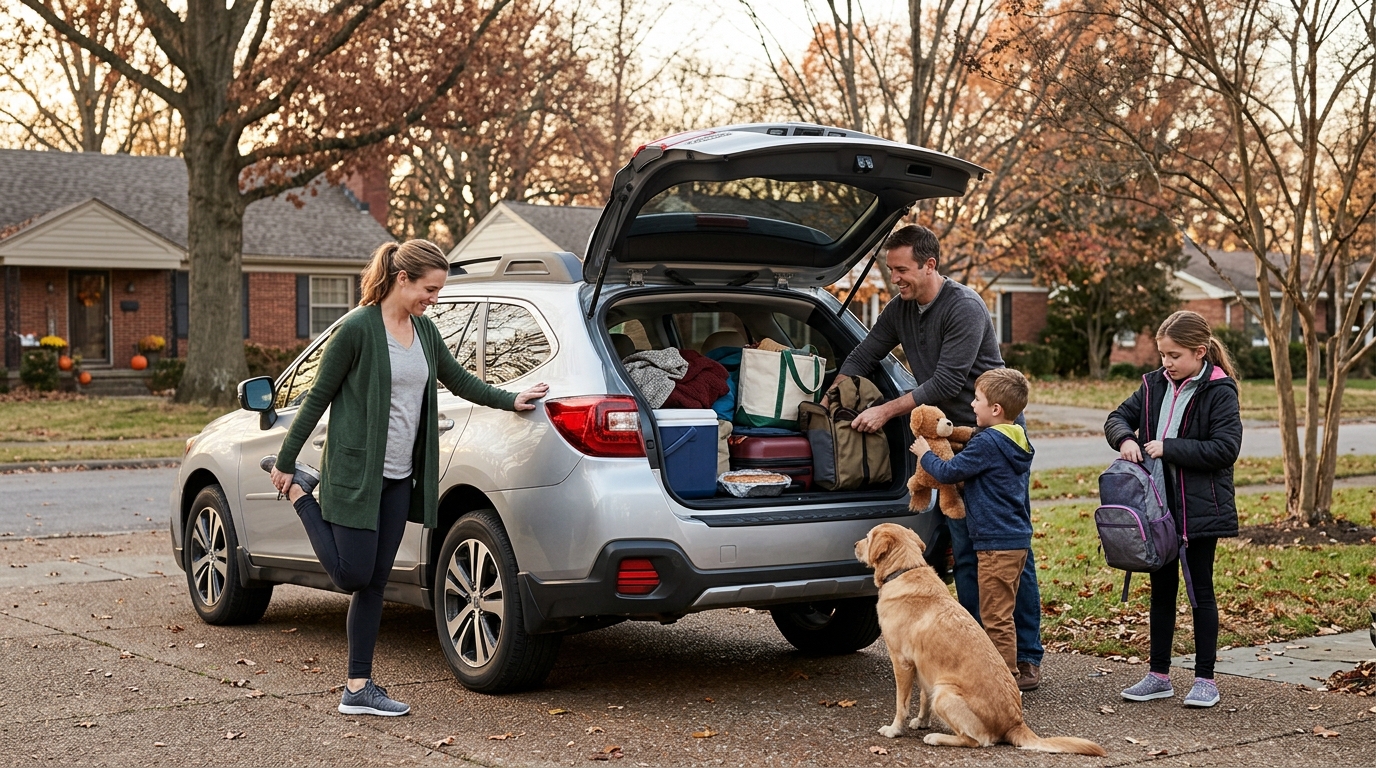
Thanksgiving travel often means full cars, busy airports, long waits, and plenty of time in one position. Whether you are driving from Louisville to see family, flying across the country, or visiting loved ones in Jeffersonville or New Albany, travel can interrupt the routines that usually keep you moving well.
Sitting for extended periods does not automatically cause a problem, and it is not the only reason people feel sore after a trip. Still, staying in one posture for a long time may contribute to temporary stiffness, muscle fatigue, and the feeling that it takes a while to get moving again. At Louisville Moves Chiropractic, we help patients understand their movement patterns and find practical strategies that fit real life, including holiday travel.
Why Travel Can Leave You Feeling Stiff
Your body is built to change positions. During a road trip or flight, however, your hips, knees, upper back, and neck may spend hours in a limited range of motion. Add holiday stress, disrupted sleep, carrying bags, unfamiliar mattresses, and less regular exercise, and it is understandable that you may feel tighter than usual.
For active adults, runners, and people focused on athletic recovery or sports recovery, travel can also feel like an abrupt pause in training. For parents, the physical demands may include loading a stroller, lifting children, managing suitcases, or reaching into a packed vehicle. The goal is not to create a perfect travel posture. It is to build in variety, move when you can, and use sensible mechanics when handling a load.
Prepare Before You Leave Louisville
A little preparation can make travel days easier. Pack early when possible so you are not rushing through repeated bending, twisting, and lifting at the last minute. Divide heavier items between smaller bags rather than filling one suitcase until it is difficult to manage. If you use a rolling bag, choose one that rolls smoothly and keep it close to your body instead of pulling it at an awkward angle.
When lifting luggage, stand close to the bag, widen your stance, bend through your hips and knees, and keep the load near your torso. Turn your feet to change direction rather than twisting your trunk while carrying the bag. For an overhead bin, consider asking for help if the item is heavy, bulky, or difficult to control. That is a practical choice, not a failure of strength.
Before getting in the car or heading to the airport, try a few easy movements:
- Shoulder rolls: Slowly roll both shoulders up, back, and down five to 10 times.
- Standing hip shifts: With hands on your hips, gently shift your weight from one leg to the other for several repetitions.
- Calf raises: Hold a stable surface if needed, rise onto the balls of your feet, then lower slowly 10 times.
- Easy trunk turns: Stand tall with your arms relaxed and gently turn your chest right and left without forcing the motion.
These are not meant to be an intense workout. They are simply a way to check in with your body and begin the day with some comfortable movement.
Set Up Your Seat for More Comfortable Travel
In the car, bring your seat close enough that you do not have to reach for the steering wheel with locked elbows. Aim for a relaxed, upright position with your back supported. Adjust the seatback so you are not reclined far away from the wheel, and make sure your head restraint is positioned appropriately behind your head. A small towel rolled behind your lower back may provide gentle support if it feels comfortable.
On a plane, use the seatback and headrest rather than holding yourself rigidly upright. If a small jacket or travel pillow behind your lower back feels helpful, use it. Keep both feet supported when possible, and avoid crossing the same leg for the entire flight. There is no single “perfect” posture; changing positions regularly is often more useful than trying to hold one posture all day.
Build Movement Breaks Into the Trip
Movement breaks do not need to be long to be worthwhile. On a road trip, consider stopping about every 60 to 90 minutes when it is safe and practical. Walk for a few minutes, use the restroom, refill water, or simply stand and stretch your legs. If travel conditions do not allow a stop on that schedule, take the next reasonable opportunity rather than worrying about an exact timer.
During a flight, stand and walk the aisle when permitted. At your seat, you can gently pump your ankles by pointing and flexing your feet, slowly straighten and bend one knee at a time, or squeeze your shoulder blades lightly together and release. These simple movements can help break up long stretches of stillness.
Hydration is another helpful travel habit. Bring a refillable bottle for the car or fill one after airport security. Water will not solve every source of stiffness, but staying hydrated can support your general comfort, especially when travel days include salty meals, coffee, or limited access to your usual routine.
Simple Mobility for Arrivals and Long Layovers
After you arrive, it can be tempting to collapse onto the couch immediately. A few minutes of gentle movement first may make the transition easier. Take a relaxed walk around the block, through the terminal, or around the house. Keep the pace easy enough that you can breathe comfortably and hold a conversation.
You can also try these plain-language mobility options:
- Chair stand: Sit near the front of a sturdy chair, place your feet beneath you, stand up slowly, then sit back down with control. Repeat five to 10 times if comfortable.
- Seated knee lift: While sitting tall, lift one knee a few inches, lower it, and alternate sides. Move slowly without leaning backward.
- Wall chest opener: Place one hand lightly on a wall beside you, turn your body slightly away until you feel a mild stretch across the front of the chest, then switch sides.
- Supported hip stretch: Hold a counter or chair for balance, step one foot behind you, and gently shift your weight forward until you feel a comfortable stretch at the front of the back hip.
Stay in a comfortable range. Do not push through sharp pain, worsening symptoms, numbness, weakness, dizziness, or any movement that feels unsafe. Stop and seek appropriate medical guidance if those symptoms occur.
How We Approach Travel-Related Stiffness
When travel stiffness does not settle as expected, or when a familiar issue makes traveling harder, a personalized assessment may be useful. At Louisville Moves Chiropractic, our comprehensive initial evaluation includes a health history, neuro and orthopedic screening, palpation, and functional movement assessment. That gives us a clearer picture of how you move and what may be contributing to your current limitations.
From there, our care may include hands-on soft tissue therapy, soft tissue mobilization, and joint mobilization to support comfortable movement. When clinically appropriate, chiropractic adjustments
may be part of the plan as well. Dr. Ian Libert also draws on a massage therapy background and may discuss options such as manual release, cupping, scraping therapy, or dry needling when they are appropriate for your goals and situation.
Travel recovery is rarely just about passive treatment. Our functional rehabilitation
approach pairs hands-on care with practical movement therapy and progressive exercises intended to help you return to the activities that matter to you. That may mean getting comfortable in the car, picking up a child, returning to injury rehab, or resuming your training routine after a holiday trip.
FAQ
Why do I feel stiff after a long car ride or flight?
Long periods in one position may contribute to stiffness and muscle fatigue, particularly when combined with lifting bags, reduced activity, poor sleep, or a change in routine. It does not mean that every ache has one cause, but changing positions and taking short walking breaks may help.
Should I use lumbar support while traveling?
A small rolled towel, jacket, or travel cushion behind the lower back may feel comfortable for some people. Use support as a tool, not a rigid rule. If it increases discomfort, change its position or remove it, and focus on varying your position throughout the trip.
How often should I get up and move during travel?
When practical, aim to take a brief movement break every 60 to 90 minutes during a drive. On a flight, stand or walk when it is permitted and safe. Even a few minutes of walking or gentle ankle, knee, and shoulder movement can be a useful change from prolonged sitting.
What is the safest way to lift a suitcase?
Get close to the suitcase, use your hips and knees to lower yourself, keep the bag close to your body, and avoid twisting while carrying it. If the bag is too heavy or awkward for an overhead bin, ask for assistance rather than forcing the lift.
When should I seek care for travel-related discomfort?
Consider an evaluation if discomfort is persistent, limits normal activities, keeps returning with travel, or makes you unsure how to move confidently. Seek prompt medical attention for severe symptoms or for new or worsening numbness, weakness, significant pain, dizziness, trouble walking, or other concerning changes.
Can chiropractic care prevent all travel pain?
No approach can guarantee that travel will be pain-free. Chiropractic care may be one part of an individualized plan to support mobility, comfort, and confidence with movement. Your plan should be based on your history, examination findings, goals, and response to care.
Educational disclaimer: This article is for general educational purposes and is not medical advice. It is not a substitute for an in-person evaluation, diagnosis, or care from a qualified healthcare professional.
If you would like guidance before a trip or support getting back to comfortable movement afterward, Louisville Moves Chiropractic is here to help. You are welcome to schedule a free consultation call or arrange an evaluation at a pace that feels right for you.